
Hospital to home
Recovery care at home after a hospital stay
The discharge paperwork says rest and follow the plan. It does not say who helps with the shower on the first morning, or who notices on day nine that meals have stopped.
We serve Lexington, Burlington, Newton, Concord and nearby towns, and after a discharge we can usually start within 24 hours.
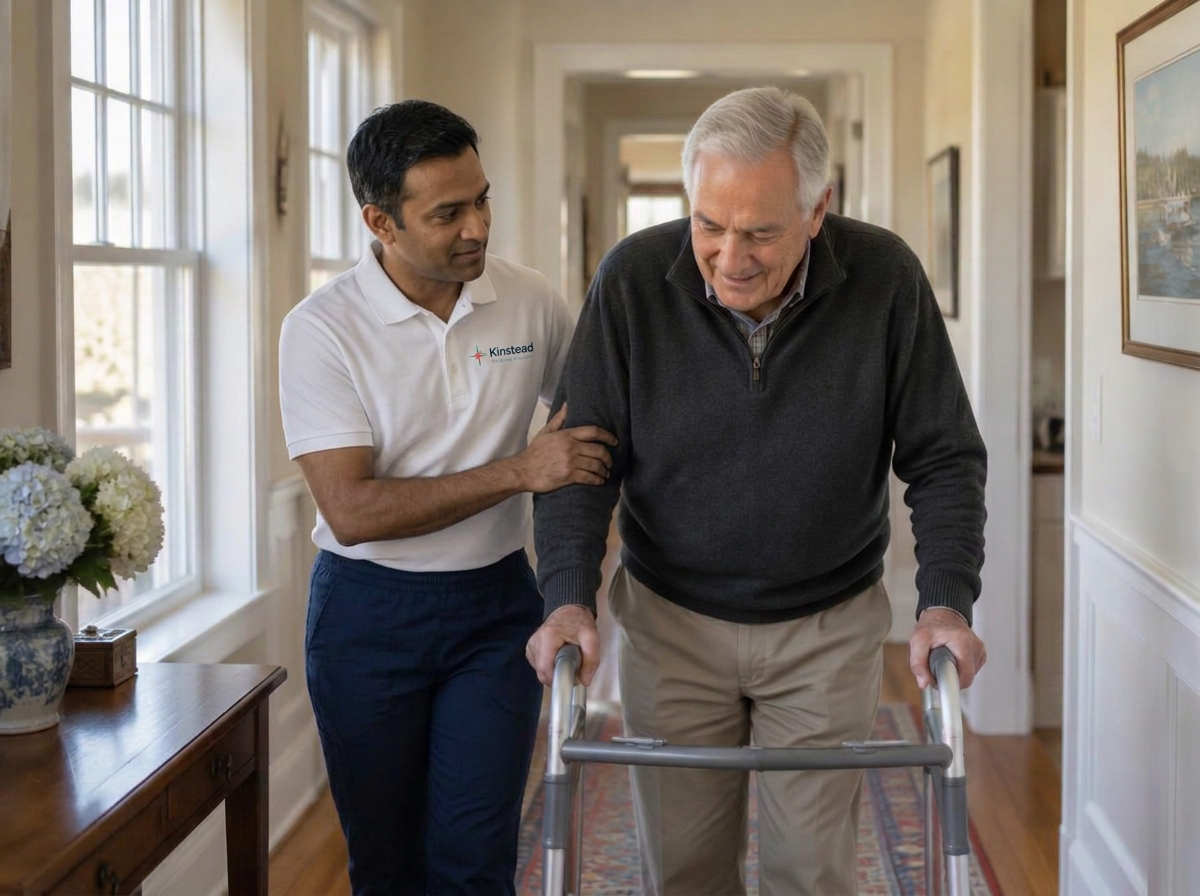
The first days home
What we cover while someone gets steady
Recovery care is short-term, practical help in the home: getting washed and dressed, moving safely between rooms, eating properly, keeping the follow-up appointments, and keeping the household running while attention goes to healing.
Our caregivers follow the schedule the doctor set, notice when something looks different, and report it the same day. We do not manage medications.
A typical recovery shift
- Morning wash, dressing and grooming at a pace that suits the day
- Steadying on stairs and in the bathroom for someone bearing their own weight
- Breakfast and lunch made, fluids kept where they can be reached
- Reminders that follow the prescriber's written schedule
- Light housekeeping, laundry and the errands that piled up
- A short written note to the family at the end of the visit
The first thirty days
What the first month at home actually looks like
Before discharge
We start before they come home
If there is time, we read the discharge instructions with you, go through the medication list as the doctor has written it, check what equipment is coming and what the house still needs, and make sure someone will be there when the car pulls up. Families who plan this part have a very different first week.
Day 0–1
We start
After a discharge we can usually begin within 24 hours. We walk the home, set the routine on paper, and meet whoever else is helping.
Week 1
Routine takes hold
Same caregiver, same hours, same order of the day. Sleeping, eating, washing and moving around the house all settle into a rhythm.
Weeks 2–3
We watch for drift
Appetite, balance, mood, whether the doctor's schedule is being followed. Anything that looks different is reported to you the same day.
Week 4
You decide what's next
Step the hours down, keep them steady, or stop. There is no minimum contract, so the plan follows the recovery.
Common reasons families call
After a stay for
Joint replacement or orthopedic surgery
Weeks of limited reach and limited weight-bearing, in a house that was not designed for it.
A fall or a fracture
Confidence usually returns slower than the body does. Someone in the room changes that.
Cardiac or general medical stays
Low energy, a new routine to keep, and appointments that need someone to drive.
Scope
What is and is not included
What we provide
- Personal care: bathing, showering, dressing, grooming, toileting and continence support
- Companion care: conversation, social time, supervision and regular check-ins
- Meal preparation, hydration reminders and assistance with eating for someone who can swallow safely
- Light housekeeping, laundry, dishes and general household upkeep
- Transportation and escorted support for appointments, errands and community outings
- Medication reminders that follow the prescriber's schedule, with same-day reporting
- Respite care for family caregivers, from a few hours to overnight cover
- Recovery support after a hospital stay, plus steady day-to-day support for someone living with dementia
What we do not provide
- Two-person or mechanical-lift transfers
- Feeding anyone with a swallowing risk, and never by tube
- Nursing, therapy, wound care, injections or medication administration
- Any case that needs more than one trained caregiver can safely manage
Reading, not selling
Understand the first month home before you decide anything
Hospital Discharge Checklist for Families in Massachusetts
A good discharge starts days before the ride home, not at the door.
8 minute readWhat Home Looks Like After Hip or Knee Replacement Surgery
The surgery is often the easy part; the weeks afterward take planning.
7 minute readWhy Falls Cluster in the First 30 Days Home
The first month home carries more fall risk than most families expect.
6 minute readDoes Medicare Pay for Home Care in Massachusetts?
The word home care covers two different things, and that difference affects what any program will pay for.
7 minute readRehab Facility or Home With Help: How Families Decide
Neither option is automatically better; it depends on the specifics of the situation.
7 minute read